The Fourth Amendment provides that “[t]he right of the people to be secure in their persons, houses, papers, and effects, against unreasonable searches and seizures, shall not be violated ....” U.S. Const. amend. IV. A person may have a legitimate expectation of privacy in places other than his home. No less than a tenant of a house, or the occupant of a room in a boarding house, McDonald v. United States, 335 U.S. 451, 69 S.Ct. 191, 93 L.Ed. 153, a guest in a hotel room is entitled to constitutional protection against unreasonable searches and seizures. Stoner v. California, 376 U.S. 483, 490, 84 S.Ct. 889, 893 (1964); Johnson v. United States, 333 U.S. 10, 68 S.Ct. 367, 92 L.Ed. 436 (1948).
Since the Fourth Amendment protects persons, not places, its protections follow wherever a person has a legitimate expectation of privacy. Minnesota v. Olson, 495 U.S. 91, 96 & n. 5, 110 S.Ct. 1684, 1688 & n. 5, 109 L.Ed.2d 85 (1990); Katz v. United States, 389 U.S. 347, 351, 88 S.Ct. 507, 19 L.Ed.2d 576 (1967). In Arkansas v. Sanders, 442 U.S. 753, 99 S.Ct. 2586, 61 L.Ed.2d 235 (1979) the Court noted that “luggage is a common repository for one's personal effects, and therefore is inevitably associated with the expectation of privacy.” Sanders, 442 U.S. at 762, 99 S.Ct. at 2592, 61 L.Ed.2d at 244.
Although the Fourth Amendment limits searches conducted by the government, and not those conducted by a private party, if the private party acts as an “instrument or agent” of the government, the search is a governmental search and is protected by the Warrant Clause. See Walter v. United States, 447 U.S. 649, 656, 100 S.Ct. 2395, 65 L.Ed.2d 410 (1980); United States v. Young, 153 F.3d 1079, 1080 (9th Cir.1998).
A private search triggers the application of the Fourth Amendment if federal agents instigate, orchestrate, encourage or exceed the scope of the private search. See United States v. Souza, 223 F.3d 1197, 1201 -1202 (10th Cir.2000). A defendant challenging a search conducted by a private party bears the burden of showing the search was governmental action. United States v. Cleaveland, 38 F.3d 1092, 1093 (9th Cir.1995); United States v. Reed, 15 F.3d 928, 931 (9th Cir.1994).
Whether a search is governmental or private depends on: (1) whether the government knew of and acquiesced in the intrusive conduct; and (2) whether the party performing the search intended to assist law enforcement efforts or further the party's own ends. See Young, 153 F.3d at 1080; United States v. Cleaveland, 38 F.3d 1092, 1093 (9th Cir.1995); United States v. Reed, 15 F.3d 928, 931 (9th Cir.1994); United States v. Walther, 652 F.2d 788, 792 (9th Cir.1981). A search is only private if the government is not involved either directly as a participant or indirectly as an encourager. United States v. Gumerlock, 590 F.2d 794, 800 (9th Cir.1979).
Saturday, February 16, 2008


Sunday, February 3, 2008
Update From The Cultural War's Frontlines
On Friday Judge Michael Mosman (D. OR) withdrew his ill advised December 2007 stay that had prevented Oregon's domestic partnership law from going into effect. Those who oppose domestic partnerships and same sex marriages worst fears may soon be realized. On the same day a New York state appeals court ruled that the state must legally recognize valid out-of-state same sex marriages.
Sunday, January 20, 2008
Belarus Editor Jailed For Islam Cartoon
According to the AP, a Belarus court sentenced a newspaper editor last Friday to three years in prison for reprinting a caricature of the Prophet Muhammad that sparked worldwide riots when it was initially published in a Danish newspaper. The Minsk City Court imposed its sentence after a closed-door trial.
President Alexander Lukashenko ordered the small-circulation Zhoda newspaper shut in February 2006 when Alexander Sdvizhkov, the former deputy editor, published the caricatures which had originally appeared in the Danish newspaper Jyllands-Posten. Calling the publication of the cartoons "a provocation against the state," this past November President Lukashenko ordered Sdvizhkov's arrest on charges that he was "inciting religious hatred."
The President's action and the court's sycophantic secret trial and sentence makes little sense since the ex-Soviet republic of Belarus is overwhelmingly Orthodox Christian; less than 1 percent of the country's 10 million is Muslim. There is no friction between Russians and Muslims. Even Belarusian Islamic leader Ismail Voronovich called the sentence excessively harsh.
Many contend the real reason that Sdvizhkov was charged and convicted of this "crime" was that he continued to speak out against the dictatorial President Lukashenko, so Lukashenko dreamed up an excuse to imprison him.
Inmate Transfers Under Prison Transfer Treaties
Under U.S. law (18 U.S.C. §§ 4100-4115) foreign nationals convicted of a crime in the U. S., and U. S. citizens or nationals convicted of a crime in a foreign country, may apply for a prisoner treaty transfer to their home country if a treaty providing for such transfer is in force between the U. S. and the foreign country involved.
The U. S. has 12 bilateral prisoner transfer treaties in force in the following countries: Bolivia, Canada, France, Hong Kong S.A.R., Marshall Islands, Mexico, Micronesia, Palau, Panama, Peru, Thailand and Turkey. In addition, the U. S. is a party to two multilateral prisoner transfer treaties, the Council of Europe Convention on the Transfer of Sentenced Persons (sometimes called the "COE Convention" or "Strasbourg Convention" after the city in which it was signed) and the Organization of American States Treaty (called the "OAS Treaty").
The U. S. has enacted legislation implementing all prisoner transfer treaties. See 18 USC §§ 4100 et seq. See also 28 CFR 2.62. Most prisoner treaty transfers between the U. S. and a foreign country involve Mexican and Canadian offenders who are incarcerated under federal and state statutes. Mexican and Canadian prisoners make up, by far, the largest segment of foreign inmates incarcerated in the U. S.
The decision to transfer or receive a prisoner under the prisoner treaty transfer system is a completely discretionary decision to be made by each country. The consent of the U.S. Government, the foreign government and the prisoner is required for each prisoner transfer. If the prisoner was convicted of a crime by a state in the U. S., and is serving a sentence in a state facility, consent of the state is also required.
Saturday, January 5, 2008
Exodus 21:23–27
This week the United States Supreme Court granted certiorari in Kennedy v. Louisiana (07-343), a case in which the Court will decide whether our evolving standards of justice and decency requires the Court to find that the death sentence constitutes cruel and unusual punishment when it is imposed upon a defendant for a crime in which the victim was not killed.
Although rare today, until the late mid-20th century several states, particularly those in the deep South, provided for the death penalty in cases other than murder. The most typical situation was when the charge was aggravated rape and the defendant was a black man and the victim was a white woman.
Patrick Kennedy was sentenced to death in Louisiana for raping a minor. The Louisiana Supreme Court upheld the death sentence. Although the Court’s conservatives still firmly support the death penalty, and the facts of the crime are aggravated, the death penalty appears to be on its final legs in the Western World and this should be a win for the defense as the liberal wing of the Court is likely to be joined by religious jurists, who will give more than lip service to the biblical belief in “an eye for an eye," Exodus 21:23-27, and hold that death is only an appropriate sanction when death is the result.
Sunday, December 30, 2007
C'mon Judge Mosman, This Is A State Issue And Not A Federal Case
United States District Judge Michael W. Mosman (D. OR) has issued an order placing on hold an Oregon domestic partnership law set to take effect Jan. 1, 2008. Although the law would not allow same sex marriages, the Oregon law would give important spousal rights to same-sex couples such as inheritance rights, child-rearing and custody rights, the right to joint state tax filings, joint health, auto and homeowners insurance policy rightss, and visitation rights at hospitals, among others.
The law does not purport or attempt to affect any federal benefits for married couples, like Social Security and joint filing of federal tax returns. The Oregon Domestic Partnership law solely affects state rights.
After the Oregon Legislature approved the domestic partnership law, gay rights opponents launched an effort to collect enough signatures to suspend the law and place it on the ballot for a statewide vote. Opponents of the law asked the federal courts to intercede after the Oregon secretary of state's office ruled that the effort to block the law via referendum had failed to collect enough valid signatures to be placed on the statewide ballot.
The state's largest gay rights group, Basic Rights Oregon, criticized the judge's decision. Both morally and legally they have a valid point. The domestic partnership law does not discriminate; it does not deprive any citizen of the equal protection of the law; and whether a state law was validly enacted or not is a state’s right issue.
Saturday, December 22, 2007
Rule 5
Rule 5 requires government agents to promptly bring an arrestee before a federal magistrate in the district of arrest. Rule 5 was meant to put a stop to coercive police third degree practices, see United States v. McNabb, 318 U.S. at 344, and secret police interrogations. Upshaw v. United States, 335 U.S. 410, 412 (1948). Yet it is becoming more common that arrestees are induced to cooperate with government agents and waive their rights under Rule 5.
The Rule 5 waiver scenario begins when case agents think an arrestee has usable information. Before the Sixth Amendment right to counsel attaches the case agent has the arrestee go "operational" as an uncharged informant. The operational period can last a few hours, a few days or even a few months.
The purpose for which a person is arrested does not alter the fact that when one is arrested a seizure subject to constitutional scrutiny has taken place. Cupp v. Murphy, 412 U.S. 291, 294, (1973); Davis v. Mississippi, 394 U.S. 721, 726-27, (1969); Terry v. Ohio, 392 U.S. 1, 10 (1968). The essential element is the physical restraint placed upon the person, not the purpose behind the restraint. Bacon v. United States, 449 F.2d 933, 942 (9th Cir. 1971). An arresting officer's determination of probable cause justifies a brief period of detention to take the executive steps incident to arrest. Gerstein v. Pugh, 420 U.S. 103 (1975). For continued detention a magistrate must make a prompt determination of probable cause. County of Riverside v. McLaughlin, 500 U.S. 44, 111 S.Ct. 1661, 114 L.Ed.2d 49 (1991).
The Sixth Amendment guarantees that in all criminal prosecutions, the accused shall enjoy the right ... to have the assistance of counsel. Gideon v. Wainwright, 372 U.S. 335 (1963). The right to counsel is vital to the fair administration of our adversary system of criminal justice. Brewer v. Williams, 430 U.S. 387, 389 (1977); quoting Kirby v. Illinois, 406 U.S. 682, 689 (1972). The Sixth Amendment right to counsel does not attach until the initiation of adversarial proceedings against the defendant. Michigan v. Jackso , 475 U.S. 625, 629 (196). The arraignment signals the initiation of adversary judicial proceedings and the attachment of the Sixth Amendment. United States v. Gouveia, 467 U.S. 180, 187 (1984).
The traditional remedy for a Rule 5 violation is the suppression of any confession obtained during any unnecessarily long period of pre-arraignment delay. Mallory v. United States, 354 U.S. 449 (1957); McNabb v. United States, supra. Suppression however cannot redress the constitutional violations that occur when the government disregards its obligations under Rule 5 nor will it deter the police from continued use of this tactic. The benefit the government obtains is not just evidence needed to convict the defendant; the bigger prize is the chance to obtain evidence needed to identify and convict the defendant's coconspirators.
The Supreme Court first used the label supervisory power in McNabb v. United States, 318 U.S. at 341, to describe its authority to formulate procedural rules in its administration of criminal justice. The supervisory power doctrine is premised on the inherent ability of the federal courts to formulate procedural rules ... to supervise the administration of justice. United States v. Larrazolo, 869 F.2d 1354, 1358 (9th Cir.1989). Case law supports dismissal of an indictment as an appropriate sanction for an egregious Rule 5 violation. See United States v. Osunde, 638 F.Supp 171. 176-77 (ND CA 1986). See also United States v. Jernigan, 582 F.2d 1211 (9th Cir.1978).
The government justifies this practice by asserting that it is giving the arrestee the opportunity to qualify for cooperation and a 5K1.1 downward departure motion at sentencing. Although delay in presenting an arrestee before a magistrate was rejected over half a century ago the disregard of Rule 5 in this type of situation usually goes unchallenged. The draconian sentences most drug defendants face is often reason enough. However, this practice is an attack on the role of defense counsel. Plea negotiations are a core defense function. United States v. Lopez, 4 F.3d 1455, 1462 (9th Cir.1993).
Parent-Child Privilege And Evidence Rule 501
In this country we do not have what's called "parent-child privilege." In a legally privileged relationship, such as that between lawyer and client, psychiatrist and patient, husband and wife, or clergyperson and congregant, exchanges are considered confidential. With some exceptions, one party cannot be compelled to testify against the other. But the relationship between parent and child is not privileged.
The testimonial privilege of a witness “shall be governed by principles of common law as they may be interpreted by the courts of the United States in the light of reason and experience.” Fed. R. Evid. 501. Federal courts have the discretion to develop rules on privileged communications based upon privileges extant in common law on a case-by-case basis. In Re Grand Jury Proceedings (Doe), 867 F.2d 562, 564-65 (9th Cir.) ( per curiam), cert. denied, 483 U.S. 906 (1989).
The Ninth Circuit does not recognize a “family privilege” which would encompass confidential communications between a child and parent. United States v. Penn, 647 F.2d 876, 885 (9th Cir.), (en banc), cert. denied, 449 U.S. 903 (1980). Six other circuits are in accord. See, Grand Jury Proceedings of John Doe v. United States, 842 F.2d 244, 247 (10th Cir. 1988); United States v. Ismail, 756 F.2d 1253, 1258 (6th Cir. 1985); United States v. Davies, 768 F.2d 893, 896-98 (7th Cir. 1984), cert. denied, 474 U.S. 1008 (1985); In Re Grand Jury Subpoena Dominic Santarelli, 740 F.2d 816, 817 (11th Cir. 1984) (per curiam); In Re Grand Jury Subpoena Issued to Lawrence Mathews, 714 F.2d 223, 224-25 (2d Cir. 1983); and United Stats v. Jones, 683 F.2d 817, 818-19 (4th Cir. 1982). Thus, the weight of the authority favors a finding against the establishment of such a privilege.
Nonetheless, in In Re Grand Jury Proceedings Unemancipated Minor Child, 949 F. Supp. 1487 (E.D. Washington, 1996), a seventeen year old child sought to quash a grand jury subpoena to avoid having to testify against his parents. The child argued that he would be psychologically and emotionally damaged if forced to testify against his parents. The district court found that although neither the constitution nor common law recognized the existence of a “parent-child” privilege, authority for such a privilege could be found under Evidence Rule 501.
However, the district court found that the child failed to establish the application of such a privilege in the case sub judice. Id. 1497. In denying the minor’s claim of “parent-child” privilege the district court observed that the child had failed to allege that the testimony the government sought would involve a "confidential" parent-child communication. The child had also failed to allege that the confidential communications sought did not involve communications made in furtherance of jointly undertaken criminal activity. Id.
Thus, to the extent that a “parent-child” privilege exists, as with all privileges, there are limits. First, the communication in question must have been between a parent and child. Second, the communication must have been uttered in confidence. Third, the communication must not have involved communications between a parent and child made in furtherance of jointly undertaken criminal activity.
Sunday, December 16, 2007
When A Resident Alien is Automatically A United States Citizen
Deportation is by far the most significant consequence to a resident alien convicted of a crime. Another less well known consequence of a federal criminal conviction is that the resident alien is not eligible to serve any part of his/her sentence in a prison camp, at a minimum security facility or at a halfway house.
U.S. Citizenship can be acquired in three ways: by birth in the United States, through naturalization after having first been a lawful permanent resident and derivatively through one or both parents.
8 USC § 1431. Children born outside the United States and residing permanently in the United States; conditions under which citizenship automatically acquired
(a) A child born outside of the United States automatically becomes a citizen of the United States when all of the following conditions have been fulfilled:
(1) At least one parent of the child is a citizen of the United States, whether by birth or naturalization.
(2) The child is under the age of eighteen years.
(3) The child is residing in the United States in the legal and physical custody of the citizen parent pursuant to a lawful admission for permanent residence.
(b) Subsection (a) of this section shall apply to a child adopted by a United States citizen parent if the child satisfies the requirements applicable to adopted children under section 1101(b)(1) of this title.
Although rare, sometimes unbeknownst to the resident alien, s/he is already a U.S. citizen. If the resident alien is derivatively a U.S. citizen through their parents pursuant to 8 USC § 1431, it doesn’t matter that the resident alien didn't act to formalize their U.S. citizenship as a minor or even that s/he was not aware of their derivative U.S. citizenship until after attaining their majority.
Whenever representing a resident alien in a criminal case a defense attorney is well advised to always consult with a lawyer versed in immigration law for advice on immigration related consequences of a criminal conviction.
Tuesday, November 27, 2007
Judge Steven Crocker Is No Rubber Stamp
Federal prosecutors in Madison, Wisconsin recently withdrew a subpoena seeking the identities of thousands of people who bought used books through online retailer Amazon.com Inc. The withdrawal came after United Magistrate Judge Stephen Crocker ruled the customers have a right to keep their reading habits from the government.
In ruling against the government Judge Crocker wrote, "The (subpoena's) chilling effect on expressive e-commerce would frost keyboards across America." Judge Crocker went on to say, "Well-founded or not, rumors of an Orwellian federal criminal investigation into the reading habits of Amazon's customers could frighten countless potential customers into canceling planned online book purchases." In quashing the subpoena Judge Crocker held that First Amendment concerns outweighed the subpoena's law enforcement purpose.
Judge Crocker not only refused the government's request to enforce the subpoena but also disclosed the subpoena's existence over the government efforts to keep the entire matter secret. Amazon's attorneys praised the ruling and said they hope Judge Crocker's decision will make it more difficult for prosecutors to obtain records involving book purchases.
Kudos to a judicial officer who stood up for the American people and the Constitution.
The Government's Privilege To Withhold The Identity Of A Confidential Informant Is Limited
The government has a limited privilege to withhold the identity of a confidential informant. Roviaro v. United States, 353 U.S. 53, 59 (1957); United States v. Sai Keung Wong, 886 KF.2d 252, 255 (9th Cir. 1989). That privilege must give way where the disclosure of the informant’s identity or contents of a communication “is relevant and helpful to the defense of the accused, or is essential to a fair determination of a cause.” Roviaro v. United States, 353 U.S. at 60-61; United States v. Sai Keung Wong, 886 F.2d at 255.
The accused bears the burden of demonstrating a need for disclosure of a confidential informant’s identity and must show that he has more than a “mere suspicion” that the informant has information that will prove “relevant and helpful or will be essential to a fair trial.” United States v. Williams, 898 F.2d 1400, 1402 (9th Cir. 1990). Once the accused makes a threshold showing, the court must apply a balancing test.
The court must balance “the public interest in protecting the flow of information against the individual’s right to prepare his defense.” Roviaro v. United States, 353 U.S. at 62. The court should consider the crime charged, the possible defenses, the significance of the informant’s testimony and other relevant factors such as the degree to which the informant was involved in the criminal activity, how helpful the informant’s testimony would be to the defendant, and the government’s interest in non-disclosure. Roviaro v. United States, 353 U.S. at 62; United States v. Gil, 58 F.3d 1414, 1421 (9th Cir. 1995).
Whether disclosure is required depends on “the particular circumstances of each case, taking into consideration the crime charged, the possible defenses, the possible significance of the informer’s testimony, and other relevant factors.” United States v. Amador-Galvan, 9 F.3d 1414, 1417 (9th Cir. 1993) (quoting Roviaro v. United States, 353 U.S. at 62).
When a defendant demonstrates a need for disclosure of the confidential informant’s identity or testimony the court must, at a minimum, hold an in camera hearing to determine whether the information sought would be material and favorable to the defense. See, e.g., United States v. Ramirez-Rangel, 103 F.3d 1501, 1505 (9th Cir. 1997); United States v. Amador-Galvan, 9 F.3d 1414, 1417 (9th Cir. 1993); United States v. Gonzalo Beltran, 915 F.2d 487, 489 (9th Cir. 1990).
Where the government invokes the privilege not to disclose the identity of its informants,
the district court must consider each of the factors identified in Roviaro and make specific
findings. United States v. Ordonez, 737 F.2d 793, 808-09 (9th Cir. 1984). See also United States v. Leon, 487 F.2d 389 (9th Cir. 1973) (If the informant was a percipient witness to the alleged crime, it is error if the district court fails to grant a defense request to order the government to produce the confidential informant and make him/her available for testimony).
Sunday, November 25, 2007
Some Sanity In A Sea Of Confusion!
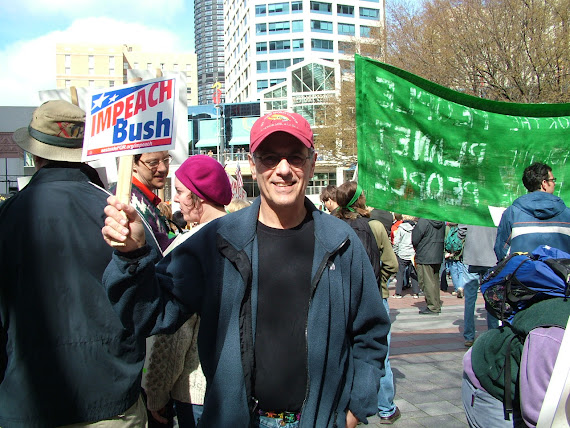
The President, Vice President and all civil Officers of the United States, shall be removed from Office on Impeachment for, and Conviction of, Treason, Bribery, or other high Crimes and Misdemeanors. -- Article II, Section 4
REP. DENNIS J. KUCINICH, D-OHIO:
We hold these truths to be self-evident: That all men are created equal; that they are endowed by their creator with certain unalienable rights; that, among these, are life, liberty and the pursuit of happiness; that, to secure these rights, governments are instituted among men, deriving their just powers from the consent of the government; and, whenever any form of government becomes destructive of these ends, it is the right of the people to alter or to abolish it.
These words from the Declaration of Independence are instructive at this moment. Because not only whenever any form of government, but whenever any government official becomes destructive of the founding purposes, that official or those officials must be held accountable. Because I believe the vice president's conduct of office has been destructive to the founding purposes of our nation. Today, I have introduced House Resolution 333, Articles of Impeachment Relating to Vice President Richard B. Cheney. I do so in defense of the rights of the American people to have a government that is honest and peaceful.
It became obvious to me that this vice president, who was a driving force for taking the United States into a war against Iraq under false pretenses, is once again rattling the sabers of war against Iran with the same intent to drive America into another war, again based on false pretenses.
Let me cite from the articles of impeachment that were introduced this afternoon, Article I, that Richard Cheney had purposely manipulated the intelligence process to deceive the citizens and the Congress of the United States by fabricating a threat of Iraqi weapons of mass destruction to justify the use of the United States armed forces against the nation of Iraq in a manner damaging to our national security.
That despite all evidence to the contrary, the vice president actively and systematically sought to deceive the citizens and the Congress of the United States about an alleged threat of Iraqi weapons of mass destruction.
That preceding the March 2003 invasion of Iraq, the vice president was fully informed that no legitimate evidence existed of weapons of mass destruction in Iraq. The vice president pressured the intelligence community to change their findings to enable the deception of the citizens and the Congress of the United States.
That in this the vice president subverted the national security interests of the United States by setting the stage for the loss of more than 3,300 United States service members and the loss of 650,000 Iraqi citizens since the United States invasion; the loss of approximately $500 billion in war costs, which has increased our federal debt; the loss of military readiness within the United States armed services, through an overextension and lack of training and lack of equipment; and the loss of United States credibility in the world affairs and decades of likely blowback created by the invasion of Iraq.
That with respect to Article II, that Richard Cheney manipulated the intelligence process to deceive the citizens and the Congress of the United States about an alleged relationship between Iraq and Al Qaida in order to justify the use of United States armed forces against the nation of Iraq in a manner damaging to our national security.
And that, despite all evidence to the contrary, the vice president actively and systematically sought to deceive the citizens and Congress of the United States about an alleged relationship between Iraq and Al Qaida.
That preceding to the March 2003 invasion of Iraq, the vice president was fully informed that no credible evidence existed of a working relationship between Iraq and Al Qaida, a fact articulated in several official documents.
With respect to Article III, that in his conduct while vice president of the United States, Richard Cheney openly threatened aggression against the Republic of Iran, absent any real threat to the United States, and has done so with the United States's proven capability to carry out such threats, thus undermining the national security interests of the United States.
That despite no evidence that Iran has the intention or the capability of attacking the United States, and despite the turmoil created by the United States's invasion of Iraq, the vice president has openly threatened aggression against Iran.
Furthermore, I point out in the articles that Article VI of the United States Constitution states, and I quote, "This Constitution and the laws of the United States shall be made in pursuance thereof and all treaties made or which shall be made under the authority of the United States shall be the supreme law of the land. Any provision of an international treaty ratified by the United States becomes the law of the United States."
The United States is signatory to the U.N. Charter, a treaty among the nations of the world. Article II, Section 4 of the United Nations Charter states, and I quote, "All members shall refrain in their international relations from the threat or use of force against the territorial integrity or political independence of any state, or in any manner inconsistent with the purposes of the United Nations."
The articles conclude by pointing out that the vice president's deception upon the citizens and the Congress of the United States that enabled the failed United States invasion of Iraq forcibly altered the rules of diplomacy so that the vice president recent belligerent actions toward Iran are destabilizing and counterproductive to the national security of the United States of America.
These articles of impeachment are not brought forth lightly. I've carefully weighed the options available to members of Congress and found this path the path that is the most important to take.
The justifications used to lead our nation to war have unquestionably been disproved. Brave soldiers and innocent civilians have lost their lives in a war the United States should never have initiated. The weight of the lies used to lead us into war has grown heavier with each death. Now is the time for Congress to examine the actions that led us into this war, just as we must work to bring the troops home. This resolution is a very serious matter, and I will urge the Committee on Judiciary to investigate and carefully consider this resolution.
Saturday, November 24, 2007
Admissibility Of Extraterritorial Searches And Foreign Wiretaps
When conducted in this country, wiretaps by federal officials are governed by Title III of the Omnibus Crime Control and Safe Streets Act of 1968, see 18 U.S.C. §§ 2510-2520. Title III does not apply outside the United States. See Stowe v. Devoy, 588 F.2d 336, 341 (2d Cir.1978), cert. denied, 442 U.S. 931, 99 S.Ct. 2862, 61 L.Ed.2d 299 (1979); United States v. Cotroni, 527 F.2d 708, 711 (2d Cir.1975), cert. denied, 426 U.S. 906, 96 S.Ct. 2226, 48 L.Ed.2d 830 (1976). Likewise neither the Fourth Amendment nor the exclusionary rule generally applies to searches conducted in foreign countries by foreign officials. United States v. Maher, 645 F.2d 780, 782 (9th Cir.1981) (Generally, "[n]either our Fourth Amendment nor the judicially created exclusionary rule applies to acts of foreign officials."); see also United States v. Staino, 690 F.Supp. 406, 408-09 (E.D.Pa.1988).
Extraterritorial searches and extraterritorial wiretap evidence is generally admissible in United States courts when foreign officials, acting on their own to enforce foreign law, properly follow their own law in obtaining the evidence. See e.g., United States v. Cotroni, 527 F.2d 708, 711-712 (2d Cir.1975), cert. denied, 426 U.S. 906, 96 S.Ct. 2226, 48 L.Ed.2d 830 (1976), This is the case even where the subject of the foreign search is an American citizen. United States v. Maturo, 982 F.2d 57, 60 (2nd Cir.1992); United States v. Rose, 570 F.2d 1358, 1361 (9th Cir.1978); see also United States v. Morrow, 537 F.2d 120, 139 (5th Cir.1976), cert. denied, 430 U.S. 956, 97 S.Ct. 1602, 51 L.Ed.2d 806 (1977). [1] However two exceptions to this general rule have developed: (1) where the involvement of the United States officials is so extensive in the search that the United States government and the foreign government are said to be involved in a "joint venture"; and, (2) where the action taken by the foreign officials shocks the judicial conscience. United States v. Peterson, 812 F.2d 486, 490 (9th Cir.1987); United States v. Staino, 690 F.Supp. at 409 & n. 8.
Prior to the decisions of the Supreme Court in Mapp v. Ohio, 367 U.S. 643, 81 S.Ct. 1684, 6 L.Ed.2d 1081, 84 A.L.R.2d 933 (1961) and Elkins v. United States, 364 U.S. 206, 80 S.Ct. 1437, 4 L.Ed.2d 1669 (1960), where the Supreme Court held that the Fourth Amendment was incorporated in the Fourteenth Amendment and therefore applicable to State agencies, it was pertinent to inquire whether Federal officials so substantially participated in a raid by State officials so as to convert the raid into a joint venture between State and Federal officials and therefore subject to the provisions of the Fourth Amendment.[2]
The essentials of that inquiry are equally pertinent in determining whether Federal officials so substantially participated in a raid by foreign officials as to convert that raid into a “joint venture” between the United States and the foreign government and therefore subject to the provisions and sanctions of the Fourth Amendment. Stonehill v. United States, 405 F.2d at 743. If the court finds that United States agents’ participation in a foreign criminal investigation is so substantial that the action is a “joint venture” between United States and foreign officials, the law of the foreign country must be consulted at the outset as part of the determination whether or not the search in question was reasonable. United States v. Peterson, 812 F.2d 486, 490 (9th Cir.1987).[3]
In analyzing the “joint venture” exception, it is important to determine which country’s law enforcement agency initiated and controlled the wiretap. See United States v. LaChapelle, 869 F.2d 488, 489 (9th Cir.1989). Merely supplying a tip to a foreign law enforcement agency however, which then conducts an investigation and search leading to an American prosecution, does not amount to a "joint venture". See, e.g., United States v. Hawkins, 661 F.2d 436, 456 (5th Cir.1981); United States v. Heller, 625 F.2d 594, 600 (5th Cir.1980). Nor does the act of a United States agent serving as a language interpreter for foreign authorities convert the search into a joint venture. Birdsell v. United States, 346 F.2d 775, 782 (5th Cir.1965), cert. denied, 382 U.S. 963, 86 S.Ct. 449, 15 L.Ed.2d 366 (1965). However, when a federal agent participates in a “joint endeavor” the effect is the same as though he had engaged in the undertaking as one exclusively his own. Corngold v. United States, 367 F.2d 1 (9th Cir.1966).
In Stonehill v. United States, 405 F.2d 738, 743 (9th Cir.1968), cert. denied, 395 U.S. 960, 89 S.Ct. 2102, 23 L.Ed.2d 747 (1969) the Court identified the following 6 factors as relevant to the “joint venture” analysis:
1) Did United States agents instigate and plan the questioned foreign law enforcement action or was it instigated and planned by foreign law enforcement officials before United State agents became involve?
2) Was the purpose of the questioned foreign law enforcement action to obtain evidence for a foreign prosecution or was it to obtain evidence for a United States prosecution?
3) Did United States agents activities commenced before or after the termination of the questioned foreign law enforcement action?
4) Were United States agents given permission to access the information after the questioned foreign law enforcement action was completed or were the United States agents given access to information which might be of interest to them while the questioned foreign law enforcement action was ongoing?
5) Is there evidence that United States agents were attempting to short circuit the Fourth Amendment rights of United States taxpayers?
6) Did United States agents make information available to foreign law enforcement officials with the intent it be used to undertake the questioned foreign law enforcement action?
[1] An alien may seek the shelter of the Fourth Amendment only to the extent that he has developed substantial connections with this country by voluntarily assuming the societal obligations imposed upon "the people of the United States." Unites States v. Guitterez, 983 F.Supp. 905, 910 (N.D.Cal.,1998); but see United States v. Verdugo-Urquidez, 494 U.S. 259, 274-275, 110 S.Ct. 1056, 1066 (1990).
[2] Under the “silver platter” doctrine, evidence seized by state officers in violation of Fourth Amendment standards was, until the decision of Elkins v. United States, 364 U.S. 206, 80 S.Ct. 1437, 4 L.Ed.2d Ed.2d 1669 (1960), admissible in a federal trial court unless the purpose of the search was to obtain evidence of a federal offense (Gambino v. United States, 275 U.S. 310, 48 S.Ct. 137, 72 L.Ed. 293, 52 A.L.R. 1381 (1927)); or unless federal officers participated in the search. Lustig v. United States, 338 U.S. 74, 69 S.Ct. 1372, 93 L.Ed. 1819 (1949); Byars v. United States, 273 U.S. 28, 47 S.Ct. 248, 71 L.Ed. 520 (1927).
[3] Foreign law, though formerly treated as an issue of fact, is now recognized as an issue of law, to be established by any relevant source, including testimony. Fed.R.Crim.P. 26.1; Fed.R.Civ.P. 44.1. Although foreign law governs whether the search was reasonable, US law governs whether illegally obtained evidence should be excluded. The essence of the inquiry is whether exclusion serves the rationale of deterring federal officers from unlawful conduct. At this point, the good faith exception to the exclusionary rule becomes part of the analysis. The determination whether federal officers will be deterred by the exclusion of evidence in a federal courtroom is a decision that necessarily implicates federal interests, and federal law determines whether the exclusionary remedy should be invoked. Peterson, 812 F.2d at 490-92.
Friday, November 23, 2007
Alien Smuggling - 8 USC § 1324
Under this statute the government must prove that: (1) an alien had entered or remained in the United States in violation of the law; (2) that the defendant transported the alien within the United States with intent to further the alien’s unlawful presence; and (3) that the defendant knew or recklessly disregarded the fact that the alien was in the United States in violation of the law. United States v. Diaz, 936 F.2d 786 (5th Cir. 1991). The defendant must have the specific intent to further the alien’s unlawful presence. United States v. Rivera, 879 F.2d 1247 (5th Cir. 1989), cert. denied, 493 U.S. 998, 110 S.Ct. 554, 107 L.ED.2d 550 (1989). The defendant does not have the requisite mental state if she merely intends to assist the alien in obtaining legal status. United States v. Merkt, 764 F.2d 266 (5th Cir. 1985) (worker at sectarian shelter for refugees drove aliens from border to San Antonio so they could apply for political asylum).
Mere transportation of an illegal alien, without more, is insufficient as a matter of law to support a conviction under this statute. United States v. Chavez-Palacios, 30 F.3d 1290 (10th Cir.1994); see also United States v. Esparza, 876 F.2d 1390 (9th Cir. 1989) (evidence insufficient as only evidence was that defendant rode in front seat of vehicle traveling in convoy with van transporting aliens). There must be a direct and substantial relationship between the defendant’s act of transportation and its furtherance of the alien’s presence. United States v. Moreno, 561 F.2d 1321, 1322 (9th Cir. 1977)(foreman of reforestation workers who knowingly transported illegal aliens to job sites did not transport in furtherance of the aliens’ illegal presence); United States v. Moreno-Duque, 718 F.Supp. 254 (D.Vt. 1989) (same).
An alien is any person who is not a natural-born or naturalized citizen, or a national of the United States. Fifth Circuit Pattern Jury Charge, Criminal § 2.03 (West 1997). The term "national of the United States" includes a citizen and a person who, though not a citizen, owes permanent allegiance to the United States. Id. While the statute prohibits transportation of someone who has "come to, entered, or remains" in the country unlawfully, the government does not need to prove all three conditions. United States v. Esparza, 882 F.2d 143, 145 (5th Cir.1989), cert. denied, 493 U.S. 969, 110 S.Ct. 418, 107 L.ED.2d 382 (1989). Thus, though the alien may be granted Orders of Release on Recognizance by the INS, he will still be considered to have "come to" and "entered" the U.S. unlawfully. Id.
The alienage of those transported must be proved in order to sustain a conviction under this statue. Alvaro-Machado, 867 F.2d at 212. The government may not introduce the final judgment arising from a conviction for an immigration status crime in order to prove that the alien-transportee is unlawfully in the country. Diaz, 936 F.2d at 788. Typically, proof of alienage is provided through the videotaped depositions of the aliens being transported, a procedure authorized under § 1324(d) of Title 8. The government must nevertheless use "reasonable means" to secure the live testimony of the witness before the video deposition is admissible. United States v. Aguilar-Tamayo, 300 F.3d 562 (5th Cir. 2002)(holding § 1324 (d) constitutional as it does not eliminate requirement of showing witness is unavailable, any error in not requiring government to show reasonable means to acquire witness testimony was harmless). However this statute has not be considered in light of Crawford v. Washington, 541 U.S. 36, 124 S.Ct. 1354, 158 L.Ed.2d 177 (2004).
The alien passenger must also be unlawfully present in the United States. The possibility that aliens can apply for asylum and remain in the country on bond or parole pending the disposition of the applications does not alter their unlawful status in the United States. United States v. Pereira-Pineda, 721 F.2d 137 (5th Cir. 1983); United States v. Rodriguez-Rodriguez, 840 F.2d 697 (9th Cir.1988) (same for possibility of adjustment of immigration status). Similarly, parole status does not confer a lawful entitlement to enter or reside in the United States, so the government's conferring of parole status is irrelevant to the issue of the defendants' guilt or innocence of smuggling illegal aliens. United States v. Alvaro-Machado, 867 F.2d 209 (5th Cir. 1989), quoting Delgado-Carrera v. I.N.S., 773 F.2d 629 (5th Cir. 1985) (in context of expulsion proceeding), and citing United States v. Anaya, 509 F.Supp. 289, 299 (S.D.Fla. 1980) (en banc decision of district judges), aff’d, United States v. Zayas-Morales, 685 F.2d 1272 (11th Cir. 1982); but see United States v. Medina-Garcia, 918 F.2d 4, 7 (1st Cir. 1990)(disagreeing with the Fifth Circuit’s view of parole status, holding that transporter of a holder of a Form I-210 letter conferring 30-day parole did not violate substantive law, though could be prosecuted for conspiracy to violate same). Thus, aliens who were paroled before they left the country, then re-entered in violation of the parole, were unlawfully present in the United States at the time they were transported. Alvaro-Machado, 867 F.2d at 212. It is not a defense to this statute that the defendant was motivated by religious purposes to transport aliens in violation of this statute. United States v. Aguilar, 883 F.2d 662 (9th Cir. 1989), cert. denied, 498 U.S. 1046 (1991).
The defendant's knowledge of the alien's illegal status is an essential element of the offense. United States v. Williams, 132 F.3d 1055, 1059 (5th Cir.1998). Typically, the government relies upon the circumstances surrounding the transporting of the undocumented aliens for proof of the defendant’s guilty state of mind. See United States v. Shaddix, 693 F.2d 1135 (5th Cir.1982)(evidence sufficient where defendant offered work to three Hispanic individuals walking along highway 60 miles from border, carrying cloth sacks, that defendant returned at night with employee to pick up aliens, opened door to employee's car and motioned aliens to enter, and that defendant called investigator for county attorney's office next morning to ask whether employee had been arrested by border patrol). The mere fact that a person has illegal aliens in their vehicle late at night a few miles north of a checkpoint does not establish knowledge of the alien’s illegal presence. United States v. Diaz, 936 F.2d 786 (5th Cir.1991)(evidence insufficient where defendant stopped at 1:30 a.m. after leaving rest stop a few miles north of checkpoint and with six illegal alien passengers).
Thursday, November 22, 2007
TYPES OF CRIMINAL CONSPIRACIES
There are three general types of criminal conspiracies. These are the so called wheel or hub-and-spoke type conspiracy, the chain conspiracy and the enterprise (RICO) conspiracy.
In a classic wheel or hub-and-spoke conspiracy a central core of conspirators recruits separate groups of co-conspirators to carry out the various functions of the illegal enterprise. See Kotteakos v. United States, 328 U.S. 750, 755, 66 S.Ct. 1239, 90 L.Ed. 1557 (1946). In such a conspiracy the core conspirators are the hub and each group of co-conspirators form a spoke leading out from the center in different directions. Kotteakos, 328 U.S. at 755, 66 S.Ct. 1239. The core conspirators move from spoke to spoke directing the functions of the conspiracy. Id.
However where the “spokes” of a conspiracy have no knowledge of or connection with any other, dealing independently with the hub conspirator, there is not a single conspiracy but rather there are as many conspiracies as there are spokes. Kotteakos, at 754-55, 66 S.Ct. 1239. To follow the wheel metaphor, establishing a single conspiracy generally requires that the Government supply proof that the spokes are bound by a "rim"; that is, the circumstances must lead to an inference that some form of overall agreement exists. "[F]or a wheel conspiracy to exist, those people who form the wheel’s spokes must have been aware and must do something in furtherance of some single, illegal enterprise. If not, there is no rim to enclose the spokes.” United States v. Levine, 546 F.2d 658, 663 (5th Cir.1977) (emphasis added). See also United States v. Abraham, 541 F.2d 1234, 1238 (7th Cir.1976) (the parties to an agreement must know of each other's existence).
In a chain conspiracy each defendant knows of each other's participation in the illegal enterprise and benefits from it. United States v. Arbelaez, 719 F.2d 1453, 1459 (9th Cir.1983), cert. denied, 467 U.S. 1255 (1984). In such cases the government need not show direct contact or explicit agreement between defendants. It is sufficient to show that each defendant knew or had reason to know of the scope of the conspiracy and that each defendant had reason to believe that [his] own benefits were dependent upon the success of the entire venture. Id. at 1458-59 (quoting United States v. Kostoff, 585 F.2d 378, 380 (9th Cir.1978)). See United States v. Casel, 995 F.2d 1299, 1306 (5th Cir.) cert. denied, 114 S.Ct. 472 (1993); (refusing to find buyer-seller relationship where defendant was acquainted only with one member of drug ring, because in a chain conspiracy a participant in a segment of the chain may be convicted of participating in the whole); United States v. Sobamowo, 892 F.2d 90, 94 (D.C.Cir.1989) (no buyer-seller relationship when conspiracy alleged is a chain and defendants were aware of the participation of third parties).
The traditional theoretical concepts of conspiracy, particularly as evolved in the "wheel" and "chain" concepts, do not adapt well to the vast, elaborate, and diversified operations of the sort found in organized crime families and narcotics networks. Congress in enacting RICO expanded traditional conspiracy law by specifying a new objective from which the unlawfulness of a conspiracy may be established: violation of a substantive provision of RICO. See Note, Conspiracy to Violate RICO: Expanding Traditional Conspiracy Law, 58 Notre Dame L. Rev. 587 (1983). This new notion furnished prosecutors a much broader scope of authority for joining defendants who are alleged to have participated in a common grouping or association. One purpose of RICO was to escape the limitations inherent in wheel and chain conspiracies by creating a new concept, enterprise conspiracy. United States v. Tille, 729 F.2d 615, 619 (9th Cir.1984) (quoting United States v. Elliott, 571 F.2d 880, 900-03 (5th Cir.), cert. denied, 439 U.S. 953, 99 S.Ct. 349, 58 L.Ed.2d 344 (1978).
The RICO conspiracy consists of an agreement to violate the "substantive" RICO law, that is, a conspiracy "to conduct or participate, directly or indirectly, in the conduct of [the] enterprise’s affairs through a pattern of racketeering activity or collection of unlawful debt," 18 U.S.C. § 1962(c), rather than of a conspiracy to perform any particular predicate crime. The "gravamen" of this kind of conspiracy is the agreement on the "overall" objective, namely, to participate in the affairs of the enterprise. See United States v. Elliot, 571 F.2d 880, 902 (5th Cir.1978), cert. denied sub nom. Hawkins v. United States, 439 U.S. 953, 99 S.Ct. 349, 58 L.Ed.2d 344 (1978).
Under RICO an enterprise comprises persons associated together for a common purpose of engaging in a course of conduct. United States v. Turkette, 452 U.S. 576, 583, 101 S.Ct. 2524, 2528, 69 L.Ed.2d 246 (1981). Proof of defendant's association with the illegal activities of the enterprise is all that is required. Associated outsiders who participate in a racketeering enterprise's affairs fall within RICO's strictures. Tille, 729 F.2d at 720; United States v. Starnes, 644 F.2d 673, 679 (7th Cir.), cert. denied, 454 U.S. 826, 102 S.Ct. 116, 70 L.Ed.2d 101 (1981); Elliott, 571 F.2d at 903.
A RICO PRIMER
It is unlawful for anyone employed by or associated with any enterprise engaged in, or the activities of which affect, interstate or foreign commerce, to conduct or participate, directly or indirectly, in the conduct of such enterprise's affairs through a pattern of racketeering activity or collection of unlawful debt. 18 U.S.C.A. § 1962(c) (West 1984). The Racketeer Influenced and Corrupt Organization Act (RICO) was passed by Congress with the declared purpose of seeking to eradicate organized crime in the United States. Russello v. United States, 464 U.S. 16, 26-27, 104 S. Ct. 296, 302-303, 78 L. Ed. 2d 17 (1983); United States v. Turkette, 452 U.S. 576, 589, 101 S. Ct. 2524, 2532, 69 L. Ed. 2d 246 (1981). A violation of Section 1962(c), requires (1) conduct (2) of an enterprise (3) through a pattern (4) of racketeering activity. Sedima, S.P.R.L. v. Imrex Co., 473 U.S. 479, 496, 105 S. Ct. 3275, 3285, 87 L. Ed. 2d 346 (1985).
A more expansive view holds that in order to be found guilty of violating the RICO statute, the government must prove beyond a reasonable doubt: (1) that an enterprise existed; (2) that the enterprise affected interstate commerce; (3) that the defendant was associated with or employed by the enterprise; (4) that the defendant engaged in a pattern of racketeering activity; and (5) that the defendant conducted or participated in the conduct of the enterprise through that pattern of racketeering activity through the commission of at least two acts of racketeering activity as set forth in the indictment. United States v. Phillips, 664 F. 2d 971, 1011 (5th Cir. Unit B Dec. 1981), cert. denied, 457 U.S. 1136, 102 S. Ct. 1265, 73 L. Ed. 2d 1354 (1982).
An "enterprise" is defined as including any individual, partnership, corporation, association, or other legal entity, and any union or group of individuals associated in fact although not a legal entity. 18 U.S.C.A. § 1961(4) (West 1984). Many courts have noted that Congress mandated a liberal construction of the RICO statute in order to effectuate its remedial purposes by holding that the term "enterprise" has an expansive statutory definition. United States v. Delano, 825 F. Supp. 534, 538-39 (W.D.N.Y. 1993), aff'd in part, rev'd in part, 55 F. 3d 720 (2d Cir. 1995), cases cited therein.
"Pattern of racketeering activity" requires at least two acts of racketeering activity committed within ten years of each other. 18 U.S.C.A. § 1961(5) (West 1984). Congress intended a fairly flexible concept of a pattern in mind. H.J., Inc. v. Northwestern Bell Tel. Co., 492 U.S. 229, 239, 109 S. Ct. 2893, 2900, 106 L. Ed. 2d 195 (1989). The government must show that the racketeering predicates are related, and that they amount to or pose a threat of continued criminal activity. Id. Racketeering predicates are related if they have the same or similar purposes, results, participants, victims, or methods of commission, or otherwise are interrelated by distinguishing characteristics and are not isolated events. Id. at 240, 109 S. Ct. at 2901; Ticor Title Ins. Co. v. Florida, 937 F. 2d 447, 450 (9th Cir. 1991). Furthermore, the degree in which these factors establish a pattern may depend on the degree of proximity, or any similarities in goals or methodology, or the number of repetitions. United States v. Indelicato, 865 F. 2d 1370, 1382 (2d Cir.), cert. denied, 493 U.S. 811, 110 S. Ct. 56, 107 L. Ed. 2d 24 (1989).
Continuity refers either to a closed period of repeated conduct, or to past conduct that by its nature projects into the future with a threat of repetition. H.J., Inc., 492 U.S. at 241-42, 109 S. Ct. at 2902. A party alleging a RICO violation may demonstrate continuity over a closed period by proving a series of related predicates extending over a substantial period of time. Id. Predicate acts extending over a few weeks or months and threatening no future criminal conduct do not satisfy this requirement as Congress was concerned with RICO in long-term criminal conduct. Id.
As to the continuity requirement, the government may show that the racketeering acts found to have been committed pose a threat of continued racketeering activity by proving: (1) that the acts are part of a long-term association that exists for criminal purposes, or (2) that they are a regular way of conducting the defendant's ongoing legitimate business, or (3) that they are a regular way of conducting or participating in an ongoing and legitimate enterprise. Id.
When a RICO action is brought before continuity can be established, then liability depends on whether the threat of continuity is demonstrated. Id. However, Judge Scalia wrote in his concurring opinion that it would be absurd to say that "at least a few months of racketeering activity. . .is generally for free, as far as RICO is concerned." Id. at 254, 109 S. Ct. at 2908. Therefore, if the predicate acts involve a distinct threat of long-term racketeering activity, either implicit or explicit, a RICO pattern is established. Id. at 242, 109 S. Ct. at 2902.
The RICO statute expressly states that it is unlawful for any person to conspire to violate any of the subsections of 18 U.S.C.A. § 1962. The government need not prove that the defendant agreed with every other conspirator, knew all of the other conspirators, or had full knowledge of all the details of the conspiracy. Delano, 825 F. Supp. at 542. All that must be shown is: (1) that the defendant agreed to commit the substantive racketeering offense through agreeing to participate in two racketeering acts; (2) that he knew the general status of the conspiracy; and (3) that he knew the conspiracy extended beyond his individual role. United States v. Rastelli, 870 F. 2d 822, 828 (2d Cir.), cert. denied, 493 U.S. 982, 110 S. Ct. 515, 107 L. Ed. 2d 516 (1989).
Source: United States Attorney Manual, Title 9, Criminal Resources Manuel, 109 RICO
Tuesday, November 20, 2007
The New Alien and Sedition Act circa 2007
The Alien and Sedition Acts were four laws passed in 1798 during the administration of President John Adams. At the time the United States was waging an undeclared war with France. Although purporting to protect the United States from alien citizens of enemy powers and to stop seditious attacks from weakening the government, the acts were designed to stifle criticism of the administration. They became a major political issue in the elections of 1798 and 1800. In time Thomas Jefferson held them all to be unconstitutional, void, and pardoned all who had been convicted of violating them.
Although the Alien and Sedition laws were forever a black mark on the legacy of John Adams, George W. Bush has so many black marks on his legacy already one more might not even get noticed. W is sure to sign the Violent Radicalization and Homegrown Terrorism Prevention Act of 2007 into law if given the chance. The act, which has overwhelming fawning support of both Democrats and Republicans in the House, passed by a 404-6 vote on October 23rd. It's purpose is to set up a Commission for a study that will “examine and report upon the facts and causes” of so called violent radicalism and extremist ideology then make legislative recommendations on combating it.
The bill will create a 10-member panel (house version is 10, current senate version is 12) to create the "National Commission on the Prevention of Violent Radicalization and Homegrown Terrorism." The Commission is tasked with compiling information about what leads up to violent radicalization, and how to prevent or combat it with the intent to issue a final report with recommendations for both preventative and countermeasures to violent radicalization, homegrown terrorism and ideologically based violence in the United States.
To the shame of our representatives that voted for this unconstitutional bill so as to appear tough on terrorism to the voters at home, the act contains the following anti-democratic points of interest:
SEC. 899A (2) VIOLENT RADICALIZATION - The term `violent radicalization' means the process of adopting or promoting an extremist belief system for the purpose of facilitating ideologically based violence to advance political, religious, or social change.
What is an extremist belief system? The term is left undefined and open to many interpretations, i.e., socialism, anarchism, communism, nationalism, liberalism, etc. that would serve to undermine expressions that don’t fit within the allowable areas of debate. A direct action led by any group that blocks traffic could be looked upon as being coercive.
SEC. 899B. (3) The Internet has aided in facilitating violent radicalization, ideologically based violence, and the homegrown terrorism process in the United States by providing access to broad and constant streams of terrorist-related propaganda to United States citizens.
The focus on the internet is not mere happenstance. The government can, and certainly will, set up far more intrusive surveillance techniques, without warrants, and the potential to criminalize ideas and not actions can mean potential penalties for your political or ideological stances, as expressed online, rather than any criminal act.
SEC. 899A. (4) IDEOLOGICALLY BASED VIOLENCE- The term `ideologically-based violence' means the use, planned use, or threatened use of force or violence by a group or individual to promote the group or individual's political, religious, or social beliefs.
What is force? Is civil disobedience covered under this term and if one is arrested at a protest rally and charged with disorderly conduct, obstructing governmental administration, or even assault does that now open you up to possible terrorist charges in the future?
As George Santayana has said: “Those who do not learn from history are doomed to repeat it.” Stay tuned....
Monday, November 19, 2007
Don't Forget To Wear Your Kevlar Vests Today
The Second Amendment to the United States Constitution reads: A well-regulated militia, being necessary to the security of a free state, the right of the people to keep and bear arms shall not be infringed.
Most would agree that drafting the Constitution was a monumental undertaking. Our Founding Fathers can be can be excused for a lapse of judgment or two in building a new nation from scratch. Other than our Patriarchs acceptance of the institution of slavery, many think the Second Amendment was one of their worst blunders. But not Alan Gottlieb, who started the Second Amendment Foundation.
He, and many like minded citizens, think the Second Amendment is one of our most important rights as citizens of the United States. "It's important to have this right for self-defense to defend your family and property. It also protects people's right to go hunting," said Mark Taff, executive director of the Bellevue-based Citizens Committee for the Right to Keep and Bear Arms. "As a last resort, it protects us against tyranny from our government." To mark National Ammo Day, Taff plans to buy 100 rounds and fire them at a Bellevue range.
Seattle resident Chris Pierce could be the next great spokeman for this organization. According to the Seattle PI, Chris said his father and grandfather introduced him to firearms. "It's just a hobby," the 21-year-old said. "But it's about defense, defense of the homeland." Chris abhors the name "assault weapon" and prefers "homeland defense" rifle to describe his semi-automatic AR-15. He also has a 9 mm handgun.
Sunday, November 18, 2007
The Promise Of Brady v. Maryland Is Not Being Kept
In Brady v. Maryland, 373 U.S. 83, 87 (1963), the Supreme Court held that “the suppression by the prosecution of evidence favorable to an accused upon request violates due process where the evidence is material either to guilt or punishment, irrespective of the good faith or bad faith of the prosecution.”
In addition to discovery that might affect the outcome of a trial, the Constitution requires the pretrial disclosure of all evidence relevant to impeachment of potential witnesses. United States v. Bagley, 473 U.S. 667 (1985). Information or documents that may reveal possible biases, prejudices, or ulterior motives of a witness or evidence that tests the witness’s perception or memory is always “material.” Davis v. Alaska, 415 U.S. 308 (1974).
In decisions following Brady, the Court had made it clear that the government’s disclosure obligations are vital and enduring constitutional principles. See, e.g., United States v. Bagley, 473 U.S. 667 (1985) (reversing conviction based on government’s failure to disclose promises made to witness); Kyles v. Whitley, 514 U.S. 419 (1995) (reversing conviction based on prosecution’s failure to disclose information suggesting that police informant committed the crime). See also United States v. Agurs, 427 U.S. 97, 112 (1976) (for appellate purposes, nondisclosure of Brady material is to be evaluated in the context of the entire record).
The government’s duty to disclose Brady material includes the correlative obligation to disclose such material “at a time when disclosure would be of value to the accused.” United States v. Davenport, 753 F.2d 1460, 1463 (9th Cir.1985). Late disclosures are excusable only if the government disclosed the information as soon as it was obtained, see, e.g., United States v. Alderdyce, 787 F.2d 1365, 1369-70 (9th Cir.1986) (late disclosure of pap smear results in rape prosecution did not violate due process where “both the [G]overnment and the defendant were functioning under the same misconception”), or as soon as its relevance has become clear, see, e.g., LaMere v. Risley, 827 F.2d 622, 624-25 (9th Cir.1987) (late disclosure of alibi rebuttal witnesses did not violate Brady, because the scope of defendant’s alibi defense could not have been anticipated). Nevertheless, the Ninth Circuit has cautioned that “[n]othing we say ... should be construed to condone unnecessary delays by the government in revealing potentially exculpatory evidence.” United States v. Alderdyce, 787 F.2d at 1370.
Timely pretrial disclosure of exculpatory information is critical because it: affects the defense investigation, how it will allocate its resources, the voir dire questions the defense will seek, the framing of opening statements, the nature of pre-trial research on evidentiary issues and jury instructions, in short, all of the strategic decisions which must be made long in advance of trial. United States v. Snell, 899 F.Supp. 17, 20 (D. Mass.1995).
This weekend I read an article about a recent CBS News and Washington Post investigation that concluded that hundreds of defendants were sitting in prisons who had been convicted with the help of evidence from an FBI forensic test that was discredited and repudiated more than two years ago. The National Academy of Sciences had concluded that decades of FBI scientists statements to jurors linking a particular bullet to those found in a suspect's gun or cartridge box based on "comparative lead bullet analysis" were so overstated as to be considered "misleading under federal rules of evidence."
Clearly this is the type of excupatory information the Supreme Court had in mind when it held in Brady v. Maryland that the government was required to disclose exculpatory information to the defense as soon as it became known. While it is distressing enough that FBI junk science was used to obtain convictions for years, what is more distressing is that over two years have passed since the FBI acknowledged its comparative lead bullet analysis test was flawed but neither the FBI lab nor the Department of Justice have taken any steps to alert the affected defendants or to tell the courts of this problem.
Wednesday, November 14, 2007
The First Thing We Must Do Is Kill All The Lawyers


This famous line by Dick the Butcher, a plotter of treachery in Shakespeare's King Henry VI, was not "lawyer bashing" but a satirical remark meant to show that the surest way to bring a country to chaos, tyranny and ruin is to remove the lawyers, the guardians of independent thinking. Just ask Pakistani President Gen. Pervez Musharraf. In his recent strong armed attempt to hold onto the reins of power in that troubled country, Musharraf cancelled upcoming elections and declared a "state of emergency" on the grounds that Islamic extremism threatened the country's ability to govern. True, Pakistan is an unstable country. But the real reason Musharraf assumed dictatorial powers was so he could remove the judges of Pakistan's Supreme Court and stave off an imminent judicial decision that Musharraf's recent election as President was illegal. When the Pakistani legal community protested, they were met by riot police and the country's military lobbing tear gas, using truncheons to administer clubbings and arrest. Thousands of Pakistani lawyers and human rights activists have been arrested and tortured since Musharraf declared a state of emergency.
How important is the rule of law? While we in this country may often take this principle for granted, today lawyers across America took to the streets to demonstrate its importance to us. Robert Bolt, in his play A Man For All Seasons, about Sir Thomas More, the 16th century Chancellor of England who refused to endorse or denounce King Henry VIII's wish to divorce his aging wife Catherine of Aragon, who could not bear him a son, so that he could marry the sister of his mistress, Anne Boleyn, said this about the importance of the rule of law:
And when the last law was down, and the Devil turned on you...
...where would you hide, Roper, the laws all being flat?
This country is planted thick with laws from coast to coast...
...Man's laws, not God's, and if you cut them down...
...and you're just the man to do it...
...do you really think you could stand upright in the wind that would blow then?
Yes. I'd give the Devil the benefit of law for my own safety's sake.
Subscribe to:
Posts (Atom)